Showing posts with label Save Our Seabirds. Show all posts

Just before Irma arrived, and after

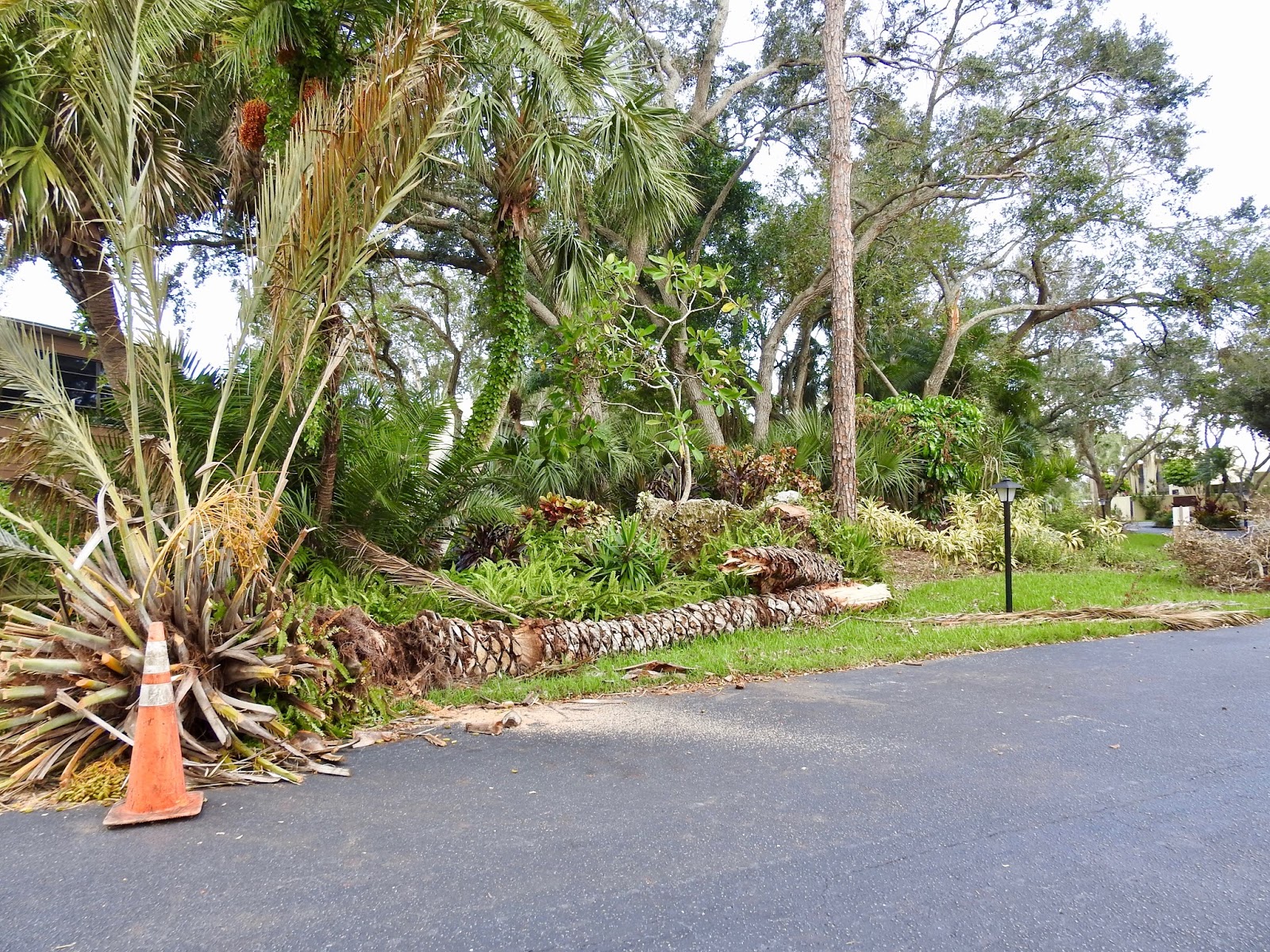
The tallest of the established old palms (Washingtonia robusta, Mexican Fan Palm) here in Wildewood Springs are still standing after the storm. Beth Price, photographer.

September 19, 2017

Terry and I boarded up and last-minute evacuated to North Carolina (where Hurricane Irma also took down many trees). We planned to stay in Wildewood and ride out the storm, and then Saturday morning, my daughter called to say that their friend who is the director of the NWS recommended evacuation: "the storm category and path is too close to call and dangerous."

Before leaving, I took a visiting family member (who boarded one of the last flights out of SRQ) to Save Our Birds on Longboat Key. All staff was facilitating the evacuation of birds to other shelters, and to certified falconry specialists' homes. Lisa, one of the rehabbers, was giving gentle hose showers to the Barred Owls to help them calm down. (Owls love gentle rain showers.) It worked.


This Screech Owl seemed to know that a storm was brewing.


We returned yesterday to find clean up has begun.


All of the trees look airier.


Surprising, the orchids remain in the trees! Some are a bit battered, and a couple need adjustments. But your memorials are snug. One, honoring Walter Goodrich's Mother, a variety I was told might not survive mounted in a tree—well, it's blooming!



Pileated Woodpeckers at Save Our Seabirds and in our neighborhood


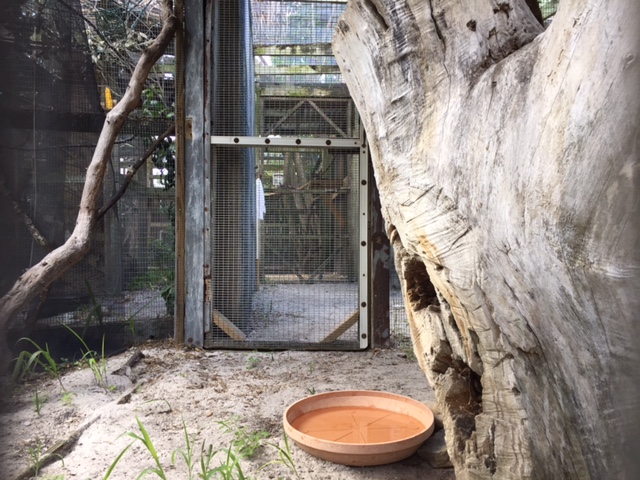
This is one of those "you had to be there" experiences. I was at Save Our Seabirds and heard the "drum" of the Pileated Woodpecker. I saw the bird on a tree trunk inside its cage, and as I slowly approached, it hopped to the ground. 


Then it peeked at me from the side! I walked to that side and it ran to the other side and peeked. I went to the other side and back it went to the other side! As you can see from this next photograph, I couldn't get a photograph of its peek at me.

The Pileated Woodpecker is the largest of the woodpeckers; its favorite food is carpenter ants. 

Woodpecker wildlife photographer C. A. Wetzel lives in Central Florida (west coast). He writes on his website: 

"In the eastern part of their range (our area), they can be found in old and new growth forests, forested woodlots, and occasionally in parks and suburban areas... They are most commonly found in large deciduous forests, particularly those that contain a large percentage of standing dead trees and fallen dead trees (C. A. Wetzel, Pileatedwoodpeckerfeeder.com)"

An advantage to not "cleaning out" some of the natural growth areas in Wildewood Springs is being able to share our habitat with residents who were here before Seibert and Neal built Wildewood Springs. Those precious natural areas are habitat gifts to woodpeckers, birds, and wildlife, even visiting Pileated Woodpeckers.

I've seen a pair of Pileated Woodpeckers a couple times in the Pineneedle area of Wildewood IIA, once on a Sabal Palm and the other time in a Southern Live Oak tree. I heard them before I saw them. Listen HERE to their wuk wuk sound and their drumming.

The bird you see in these photographs cannot be released due to its injuries. Instead, it offers visitors to Save Our Birds a chance to observe, learn, and embrace caring wildlife practices.

A visit to Save Our Seabirds to see owls that likely live in our neighborhood

 Florida Great Horned Owl. This owl's wing hangs a bit. "It was kicked out of its nest by its parents who apparently sensed it was unable to sustain itself in the wild, a common event in the bird world (Save Our Seabirds)." 

I visited Save Our Seabirds on the south end of Longboat Key on the grounds of Mote Marine to see what birds they're rehabilitating and to study the owls and hawks. I am learning how to identify them by sight and call. I took all of these photographs.


I was surprised to see that they had six Great Horned Owls. I'll be listening for their "who hoo" calls at night—they certainly must be residing in our neighborhood.

Florida Great Horned Owl

Its tufts (also called plumicorns) are down which might mean it's not uptight with my presence. This bird was wide awake while 4 others in the large aviary space slept. They mate for life, have talons that extend 4 - 8 inches and incredible digestive systems (pellet out what's not digestible), oh, and the bird books say this owl is one of the few animals that think skunks are yummy.

Barred Owl


Barn Owl


I remember visiting my sister (over 20 years ago) who lived near the Manatee river off 26th Street. When I walked up to her door, a Barn owl owlet was on her doorstep. A nest was in a nearby yard. The owlet on her doorstep was learning to fly and resting there.