Showing posts with label American White Ibis. Show all posts

A wonderful flock (ha!) of neighbors photograph wildlife in our neighborhood

Photo credit: Marc Holtsberg, male Pileated feeds a female, likely a juvenile; 
May 15, 2021

There are almost two handfuls of photographers capturing and sharing wildlife wonderment moments while walking in Wildewood Springs I and II and Springlakes*. 

One of the nicest treats is opening my inbox to see what others are discovering and willing to share with other neighbors. 

From Marc Holtsberg's lens - Pileated Woodpeckers.

While walking in the WWS neighborhood, Marc noticed four Pileateds. They were likely adults and fledges flitting and feeding. 


(Marc saw these Pileateds in a different nesting area from last year's nest - last year -one post; another; both 4/2020).

Marc also photographs adults and chicks in the Cooper's Hawk nest on Wildewood Drive. Here is a recent photo of an adult Cooper.


Beth Price's 
Wildewood Springs Bird eList is HERE. Oh the birds she has photographed! (Her family's place nicknamed "Priceless" is in Springdale.) Here is a photo of an American Robin Beth took in Springdale.


Thomas Couillard and Jeanne Higbee (Woodlawn) send regular updates about the 3 Yellow Crowned Night Heron nests. Thomas keeps track of the hatchings. How? By the egg shells the adults push over the nest side.


Jeanne shared this observation of activity around one of the YCNH nests. With the pair of Barred Owls around, it seems that there is an active negotiation of territory.

Something new tonight. There are now clearly hatchlings in both nests 1&2, which are only about 10 feet apart...Tonight all four parents stuck around after feeding time. Of course, we personify everything, so we decided that they were standing guard after the attention from the owls. But then a heron that is not fully an adult flew in and stayed nearby, too. The adults did nothing to drive it away as they would if it had been a full-grown adult. Then when one of the adults started collecting twigs to add to nest 1, the younger bird followed wherever it went. This went on for more than an hour and the young one was still there when we left. Our hypothesis was that it was one of the young from that tree last year..."

This is a photograph I took early one morning this week of one of the Yellow Crowned Night Herons sitting on the nest.


Betty Pander sent this short amazing video of a monarch emerging from its chrysalis behind her place.


Susan Herman (Pineneedle) recently shared photographs. She photographed an Anhinga, Peninsula Cooter, and White Ibis near her place.


And a Peninsula Cooter Turtle.


Earl Bodman (Sherwood) holding his sweet cat - they were on the way to the vet. When he introduced himself, I recognized his name from his photographs on the WWS I website. 


Earl's photo of a juvenile Bald Eagle from the WWS I website. 


Steve Rymph (Woodlawn) observes the bee box and Wood Duck boxes. He's also created a Butterfly garden near his place. An update in March was:


After clearing out the schefflera I could actually see a [Wood Duck] hen entering the second box...The hens used that nesting box as a "dump" for eggs they did not incubate last year, 15 eggs total. I cleaned the box and added new nesting material over a month ago so I dearly hope someone will settle in. My understanding is the hens will not incubate until they have laid a full clutch of eggs over several days. That way the eggs all hatch at the same time. 
Faith Buell sent updates on a Muscovy Duck nest in Springlakes. Can't place the Muscovy Duck? This is what it looks like.


The
WWS I website includes many photographs from other neighbor photographers. To name a few: Earl, Beth Ramsey, Barb West, Tom Turnwald, and Michael Zinda. Michael took this photo of a Great Egret near one of the Wildewood Springs signs.


From my lens this past week, a Florida Soft Shell Turtle laying eggs!


NOTE
Wildewood Springs is divided into two sections. Wildewood I and II, and includes a third section called Springlakes. There are 14 villages total. Wildewood I includes 558 condo units in Pinehurst, Sherwood, Springdale, Palm Tree, Lakeside, Woodlawn, Oakview, and Oak. These villages are part of the WWS Condo Association.

Wildewood II consists of Tidewater, Timberlake, Lakewood, Wild Palm, and Pineneedle. These villages as well as Springlakes have their own HOAs. 


A diverse flock of ibis and heron and, look, a pair of Hooded Mergansers

On a windy, cold-for-me, day this week I headed to a nearby preserve: the Manatee Road entrance to Robinson Preserve. Walking briskly to warm up, I paused at a protected area and discovered a group of birds in the distant grasses: a Little Blue Heron flying in (blueish/grayish legs = little blue), White Ibis (notice their red-pink curved bills) and a Great Egret (right side of photograph; if you could see its legs, they would be black). 

But wait, what is that paddling duck-like bird? 

I took a few more photographs and used What's this bird? to help figure it out. I narrowed it down to Merganser, but what type? Here is another photograph.


They are both Hooded Mergansers. The lead is a first year male and the other is a female. Notice the golden eye and darker bill on the male. The female has more orange on its bill and a darker eye.

Male, golden eye and darker bill.


When that male Hooded Merganser matures, he'll look like this (a black head with a patch of white with that hood appearance).

Female Hooded Merganser (yellow-orange in bill, dark eye):


And now, in the foreground with the female Hooded Merganser, what about this pair of ducks? What type are they? 

They are Female Redheads! (I needed the group to help with the identification.)


On my drive home, I stopped on 53rd to get a photograph of hundreds of female and male Redheads. 


Redhead Ducks hanging out on the edge of the pond with Cormorants.


Though I photographed these birds at the preserve, I have seen them here in Wildewood Springs, too.

Pond turnover and so many birds feasting

Brown Pelican
Wildewood Springs, the large pond.

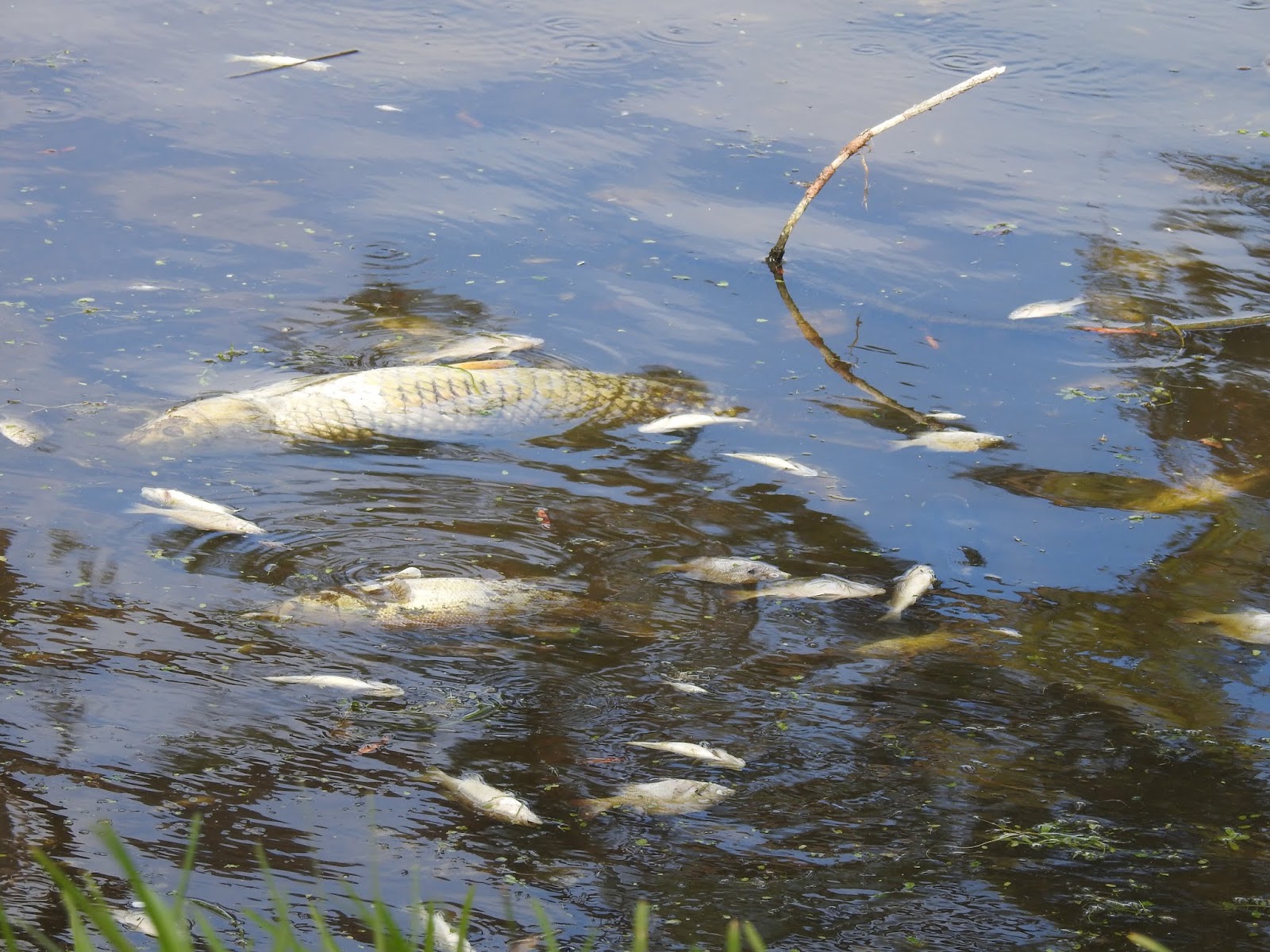
Fall pond turnovers are common in Florida. It seems that's what happened on the big pond in Wildewood. Fish are sluggish and then die. 


And gosh, the birds come in numbers and variety. Before I share the photos I took November 29, 30, 2018 I want to remind all of us how fortunate we are to share this incredible habitat with wildlife. And, to please not feed wildlife, including birds.*

Here are some photographs.

Great Egret (large orange bill), Snowy Egret (black bill, yellow at end of bill near eye; Wood Stork (juvenile).


Tri-Colored Heron. The first photo—a few seconds before getting a fish.


This Tri-Colored Heron is hanging out with a juvenile Cattle Egret.


These are American White Ibis. White with the peach-orange bills. Oh, and a Mallard Duck on the end. Sounds like a song—and a partridge in a pear tree.


Wood Storks. So many. And then one taking a drink. A head-on view—this bird reminds me that birds are descendants of dinosaurs.


A juvenile Bald Eagle caused quite a stir with the birds because both the fish and birds make for a smorgasbord lunch selection. I asked my birding pals if it was male or female. They say that we'd need to see a male and female next to each other—the female is significantly larger.


Ring-billed Gull and a Ruddy Duck! My first sighting of the Ruddy. (I confirm these IDs with a birding group.) They said the white feathers under its tail is a good clue. I photographed from a long distance, but the last photo you can see a little bit of its signature blue bill.


Brown Pelicans enjoying big gulps on the pond.


Laughing Gulls. All of them. In concert with me, joyfully celebrating this incredible chance to see so many different birds.


Shoveler Duck, female. My first sighting. Holy moley!


I'll look again this afternoon and share more photographs. A neighbor reported a Sandhill Crane (!) on a grassy area near the pond. I hope I see it and get a photograph for you. Let me know about your sightings and I'll add them.


*I am writing this with kindness: please don't feed the birds.

When I moved here, I didn't know why we weren't supposed to feed the birds! I'm glad I found out. And I'm passing the information to you.

Many of us have second homes in other places or moved to Wildewood from other states where bird feeders are used to augment birds' diets. However, here in central Florida we do not need feeders. In fact, it harms the birds. I wrote a post about that after Wildlife, Inc. educators visited us. Briefly, birds become dependent, it disrupts migration, and our habitat provides exactly the food the birds need. Many people think giving human food leftovers, crackers, cereals, bread is okay. It isn't, it causes disease and weakens birds' bones.

Wildewood Associations include a rule in their booklets to residents about not feeling wildlife, including birds. Our rule was adapted from the Florida Department of Wildlife where they ask Floridians to not feed birds and also list certain birds, that if fed and caught, come with big fines (Sandhill Crane, Wood Stork). 

Wildewood Springs is Audubon Certified. If you see anyone feeding, the most helpful thing to do is to report the unit number to your property manager and ask to remain anonymous. They will relay the information. I believe that neighbors want to be kind to wildlife and simply might not know that we do not feed birds for important, caring reasons.