Showing posts with label Barb Reis. Show all posts

Coyote reminds us how to help all wildlife


Barb Reis took these photos of a Coyote. 

My first thought is a gentle one - this is a welcoming community to all creatures. This coyote senses Barb's kindness and is comfortable enough to hang out (briefly).

So here's a good opportunity to learn more about Coyotes in Florida. This fact sheet is full, beginning with "coyote bites are rare" and includes information about keeping children and pets safe.

Though coyotes are always around, the photos remind us to NOT feed wildlife.

Wildlife professionals and Wildewood HOAs are emphatic about the message of NOT feeding any wildlife in Florida. 

If you see anyone feeding wildlife, they may be visiting and not know why we don't feed birds or any wildlife. Invite them to learn how to support our habitat and wildlife.

Barred Owl in the pond?

Barred Owl standing on the edge of the pond, photograph by Barb Reis

In a post about recent owl sightings was this photo of a Barred Owl peeking through the flora. Well, that owl was standing in the pond. My Barred Owl gazing view is usually upward in a slow scan of Slash Pines and Oak trees. I hadn't thought to look for owls in the shallow areas of the pond! Barb Reis shared a video of her pond sighting:

With that information, I now check the edge of the pond. On 3 occasions, oh my goodness - there owl is! 


A crummy iPhone photo, but can you find the Barred Owl?

NOTE: 

In July, Blogger will eliminate the widget that allows automatic sending of Wildewood Wonder posts to those who have signed up by email. To receive notification of posts in the future, send your email address to me at barrettsmb@gmail.com. And/or, visit and "like" the newly created FaceBook page Wildewood Wonders. It's HERE.

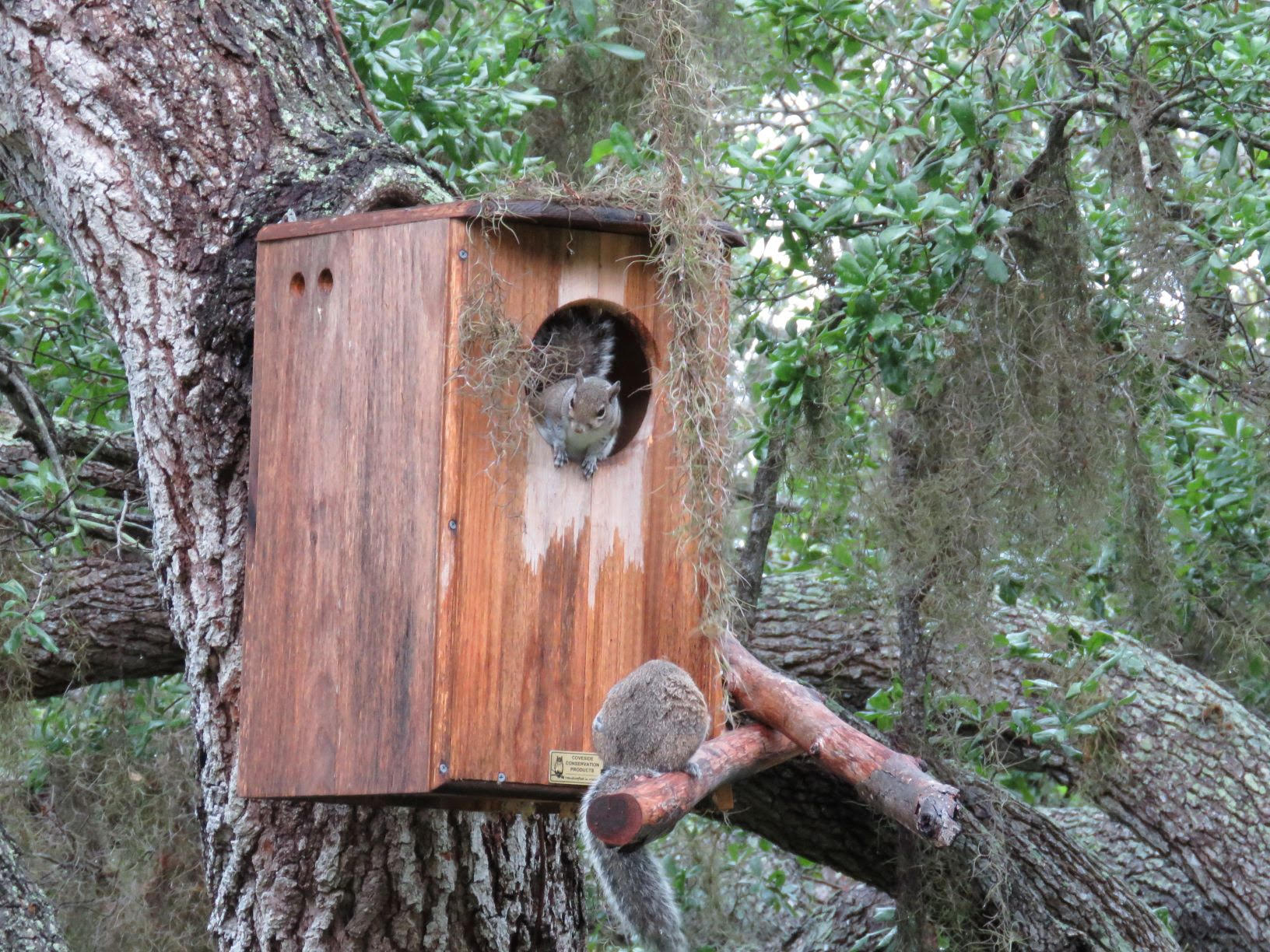
Recent visitors to the owl nesting box

Look! A Tufted Titmouse in the owl box.

Barb Reis has her eye (and camera lens) on the owl nesting box. All photographs on this post are hers .

The titmouse gathers wood chips from the floor of the nesting box. For a nest perhaps?


A Red-bellied Woodpecker, female. 


A pair of squirrels take cover after a rain.


A Great Crested Flycatcher in the owl box - is bird daydreaming?


And then...oh my goodness. We have been waiting for a Barred Owl to find the box!


Rabbit and rodents make up the bulk (90%) of the Coyote's diet in Florida

Just last week and before tropical storm Eta, Barb Reis sent this photo of a Coyote along with the message, "Look who just visited us." I think she meant, look who is looking for a duck lunch. No such luck this time about its lunch. 

Then Coyote headed over to a nearby butterfly garden to sniff the flowers. Or check for rabbits or rodents. "Rabbits and rodents make up the bulk (90%) of their diet in most areas." 

That quote is from this article HERE ("Dispelling myths about the coyote in Florida or more than you ever want to know about the coyote in Florida."

Barb Reis' photo updates: Red-shouldered Hawk fledge, Wood Duck female, Yellow Crowned Night Heron


Barb Reis photographed a newly fledged Red-Shouldered Hawk enjoying baths in the pond. (June 5, 2020). 

According to Birds of the World (Cornell, a subscription website), fledges leave the nest at about 6 weeks, though they roost near or in the nest until about 14 weeks. Generally, the fledges are able to hunt for themselves (small mammals, reptiles, amphibians) at about 13 weeks, though a common call through summer are juveniles calling to be fed. By the way, the Red-shoulder Hawk can be described as natural vermin control.

Then, a few more photos of the female Wood Duck at the Barred Owl nesting box.


Last, look! In one of my favorite photographs, Barb took a family portrait of one of the Yellow Crowned Night Heron families. (May 7, 2020)


Little Blue Heron (Photographs by Barb Reis)


All photos of the Little Blues on this page were taken by Barb Reis.

It takes a flock. I write that with a smile and appreciation for other birders in Wildewood Springs. Especially Barbara Reis.

I misidentified the Little Blue Heron in a prior post. Thanks to Wildewood neighbor and fellow birder Barb, here are photographs of a Little Blue Heron. Gorgeous photos and birds, right?

Here is an adult (blue and purple) with a juvenile (white). Barb helped by writing, "notice the color of the legs." Great Egrets have black legs. Little blues, yellowish-green that become a gray-green. See?


These two photographs show an "immature Little Blue Heron molting into adult plumage".


[The Little Blue is on the State of North American's Bird Watch List, which names birds most at risk of extinction without significant conservation actions to reverse declines and reduce threats from habitat loss and changes. Little Blues are sensitive to water quality. The main risk is from eating prey contaminated by pesticides and heavy metals (All About Birds, Cornell).]

PS These next two photographs are of a breeding-plumaged Great Egret (not a Little Blue Heron). I misidentified them. I deleted the incorrect post.  


Notice the black legs of the Great Egret.